
Prawn Paste Malaysia: Why Belacan Makes the Best Marinade
The Science of Salt, Umami & Fermentation
By SSL Belacan | Penang, since the 1960s
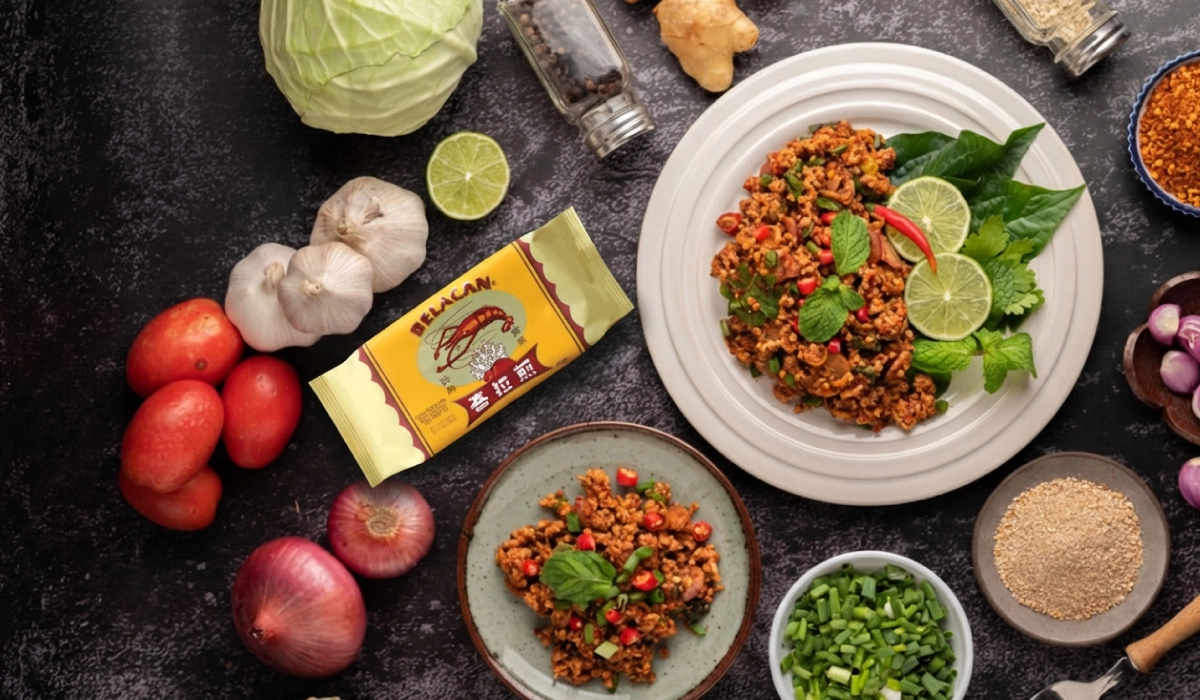
There is a moment, in almost every Malaysian kitchen, when a small piece of belacan hits a hot pan. The aroma is instant — sharp, briny, unmistakable. Within seconds it softens into something warmer, deeper, almost roasted. That transformation is not accident. It is chemistry, refined over generations.
For sixty years, SSL Belacan has been crafting authentic prawn paste Malaysia in Batu Ferringhi, Penang, using just two ingredients: sun-dried shrimp and salt. No additives. No artificial colouring. And while most cooks know belacan as the soul of sambal or the backbone of a good nasi lemak sambal, fewer realise how remarkable it is as a marinade.
This is the science of why belacan — especially a clean, traditionally-made prawn paste — is one of the most efficient marinade ingredients in any cuisine.
The Two Ingredients Doing All the Work
Belacan’s power comes from the synergy of its only two components: salt, which modifies the meat, and fermented shrimp, which floods it with flavour. Each plays a distinct scientific role, and together they form a marinade system more efficient than most commercial seasonings.
Salt: the functional foundation
Salt is not just seasoning. Applied to meat, it initiates osmosis — first drawing moisture to the surface, then allowing that moisture, now carrying dissolved flavour, to be reabsorbed deeper into the fibres. This is how marinade gets past the surface and into the meat.
At the molecular level, salt interacts with muscle proteins like myosin and actin. It causes partial protein unfolding (a process called denaturation), which increases the meat’s water-holding capacity. The result: meat that stays juicier through cooking, with better tenderness and a more satisfying bite.
This is why a properly salted piece of chicken or beef feels fundamentally different on the palate — it is not just seasoned, it is structurally changed.
Fermented shrimp: the flavour engine
The second half of belacan is where the magic happens. During fermentation, shrimp proteins are broken down by enzymes and microbes into amino acids, peptides, and volatile aromatic compounds. Chief among them is glutamic acid — the molecule that defines umami, the fifth taste.
Fermentation is essentially a form of pre-digestion. By the time a block of premium prawn paste Malaysia reaches your kitchen, the proteins have already been broken into smaller, more reactive molecules. These dissolve quickly, bind to the meat’s surface, and drive flavour absorption faster than raw seasonings ever could.
It is also why a tiny amount of belacan makes such a dramatic difference. A quarter-teaspoon of SSL Belacan contains more concentrated umami than half a cup of most marinades.
The Synergy: A High-Efficiency Marinade System
Neither salt nor fermented shrimp would be as powerful alone. Their real strength is in how they work together.
Salt opens up the muscle structure — loosening fibres, drawing in moisture, creating space. Fermented shrimp fills that space with umami, peptides, and aromatic compounds. The door opens; the flavour walks in.
In practice, this means:
- Less marinade time. 30 to 60 minutes is enough for most cuts.
- Smaller quantities. Half a teaspoon of belacan per 500g of protein is often enough.
- More consistent results. The fermentation has already done the “work” that other marinades rely on time and enzymes to finish.
Why Clean-Label Matters Here
Some commercial belacan brands add rice flour, artificial colouring, or MSG to cut costs or standardise appearance. These additions interfere with the marinade chemistry — flour absorbs moisture, colouring masks the natural deep purplish-brown, and added MSG muddies the glutamate profile. Authentic prawn paste Malaysia like SSL Belacan contains only shrimp and salt, which is why the synergy works cleanly.
What Happens in the Pan
Marinating is only half the story. The real transformation happens under heat.
As the meat cooks, the free amino acids from the fermented shrimp drive the Maillard reaction — the cascade of chemical reactions that produces browning, crust, and the savoury, roasted aromas we associate with grilled and pan-seared food. Meat alone has limited reactants for strong Maillard browning; belacan’s amino acids accelerate and deepen it.
At the same time, the volatile aromatic compounds that gave raw belacan its pungency are transformed by heat. What was sharp becomes warm. What was briny becomes roasted. The result is the unmistakable caramelised-savoury character you find in a good belacan fried chicken, pork ribs, or grilled satay.
This is the moment belacan earns its place. It does not just flavour the outside of the meat. It chemically rebuilds the crust.
How to Actually Use Belacan as a Marinade
Science is only useful if you can apply it. Here is the practical version.
The basic ratio
For 500g of protein, start with:
- 1 teaspoon SSL Belacan (roasted — see below)
- 1 tablespoon neutral oil
- 2 cloves garlic, minced
- 1 teaspoon sugar (balances the salt and aids Maillard browning)
- Juice of half a lime or 1 tablespoon of tamarind water
- Optional: 1 teaspoon chilli paste or 1 fresh chilli, minced
Mix into a paste, coat the protein evenly, and rest for 30–60 minutes in the fridge. That is it.
Roast the belacan first
Raw belacan has intense, concentrated aroma. Roasting tempers it and unlocks the deeper caramelised notes. Break off your portion, wrap in foil, and dry-pan toast on low heat for 2–3 minutes per side until the kitchen smells fragrant (not acrid). Let it cool, then crumble into your marinade.
For a quick method, microwave the wrapped belacan on medium for 20–30 seconds. Less traditional, but it works.
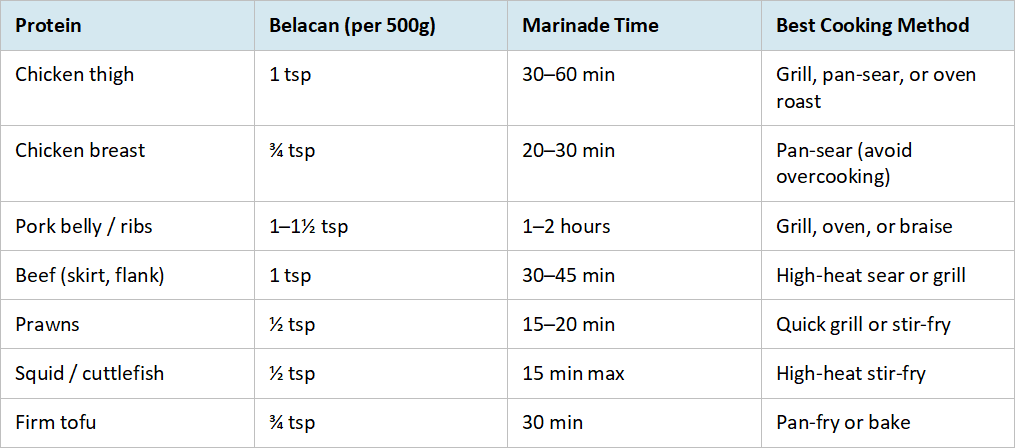
Protein-by-protein quick guide
Put the ratios to work
These ratios are the backbone of several SSL Belacan recipes: our Belacan Fried Chicken (chicken thigh), Sambal Prawns (prawns, short marinade), and the marinade base for Kangkung Belacan stir-fry. Start here, then adapt the chilli and sourness to the dish.
A Note on Tradition (and a Small Safety Benefit)
Long before refrigeration, belacan was part of Southeast Asian food preservation culture. The combination of high salt content and fermentation-derived compounds naturally reduces water activity and slows microbial growth — one of the reasons belacan itself keeps for years in a dry pantry.
This is not a substitute for modern food safety practices. But it is a useful reminder that belacan is not a modern flavouring invented for convenience. It is a heritage ingredient engineered by generations of cooks to do many things at once: season, preserve, tenderise, and transform.
At SSL Belacan, our MeSTI certification and FDA-compliant processing ensure that every brick of our premium prawn paste Malaysia meets modern food safety standards — while our 60-year-old traditional sun-drying method preserves the depth of flavour that makes belacan worth using in the first place.
The Bottom Line
Belacan is not just a seasoning. It is a marinade system — salt and fermented shrimp working in chemical partnership to change how meat holds moisture, how deeply flavour penetrates, and how beautifully it browns.
In practical terms, that means:
- Shorter marinade times (30–60 minutes for most cuts)
- Smaller quantities needed (a little goes a very long way)
- Better crust, deeper aroma, juicier meat
- A cleaner label than almost any commercial marinade
Used well, belacan does not just add flavour. It changes how the meat behaves in the pan. That is the quiet brilliance of a 60-year-old Penang recipe: two ingredients, doing the work of twenty.
Try It With SSL Belacan
Our premium prawn paste Malaysia is made in Batu Ferringhi, Penang, from only sun-dried shrimp and salt — MeSTI certified and FDA compliant. Available in 240g and 480g bricks on Lazada, Shopee, Jaya Grocer, and Sunshine Online. → Shop Premium Prawn Paste | → Explore our Prawn Paste RecipesFrequently Asked Questions
1. How do you use prawn paste in a marinade?
Prawn paste — belacan — is best roasted first to release its aroma, then crumbled into a marinade with oil, garlic, sugar, and an acid like lime or tamarind. Start with 1 teaspoon per 500g of protein and rest for 30–60 minutes before cooking.
2. How much belacan should I use in a marinade?
Start with 1 teaspoon per 500g of protein. Belacan is concentrated — you want it to enhance, not dominate. Scale up gradually if you want a bolder flavour.
3. Do I need to roast belacan before marinating?
Yes. Roasting (2–3 minutes in foil over low heat) mellows the raw pungency and unlocks the deeper aromatic compounds. Un-roasted belacan can overpower a marinade with a sharp, fishy note.
4. Can I substitute fish sauce for belacan in a marinade?
They share umami qualities, but they behave differently. Fish sauce is liquid and adds moisture; belacan is a concentrated paste that adheres to the meat and drives Maillard browning. For marinades, belacan gives a deeper crust and more complex aroma.
5. Is belacan the same as prawn paste?
Belacan is the Malaysian form of prawn paste, made from fermented tiny shrimp and salt, then sun-dried and pressed into firm blocks. Compared to other prawn paste varieties (Indonesian terasi, Thai kapi, Vietnamese mắm tôm), authentic Malaysian belacan has a drier, firmer texture and a deeper, more roasted aroma when toasted.
6. How long can I marinate meat with belacan?
For most proteins, 30–60 minutes is ideal. Beyond 2 hours, the salt content can start to cure rather than marinate, pulling moisture out. Delicate proteins like prawns should marinate no more than 15–20 minutes.
7. Is SSL Belacan suitable for export markets and clean-label cooking?
Yes. SSL Belacan contains only two ingredients — sun-dried shrimp and salt — with no additives, MSG, or artificial colouring. We are MeSTI certified and FDA compliant, and currently export to Singapore, Australia, and Taiwan.
8. Where can I buy authentic prawn paste Malaysia?
SSL Belacan is available in Malaysia at Jaya Grocer and Sunshine Online, and via Lazada and Shopee across the region. For bulk, distributor, or international export enquiries, please contact us directly via our Contact page.